
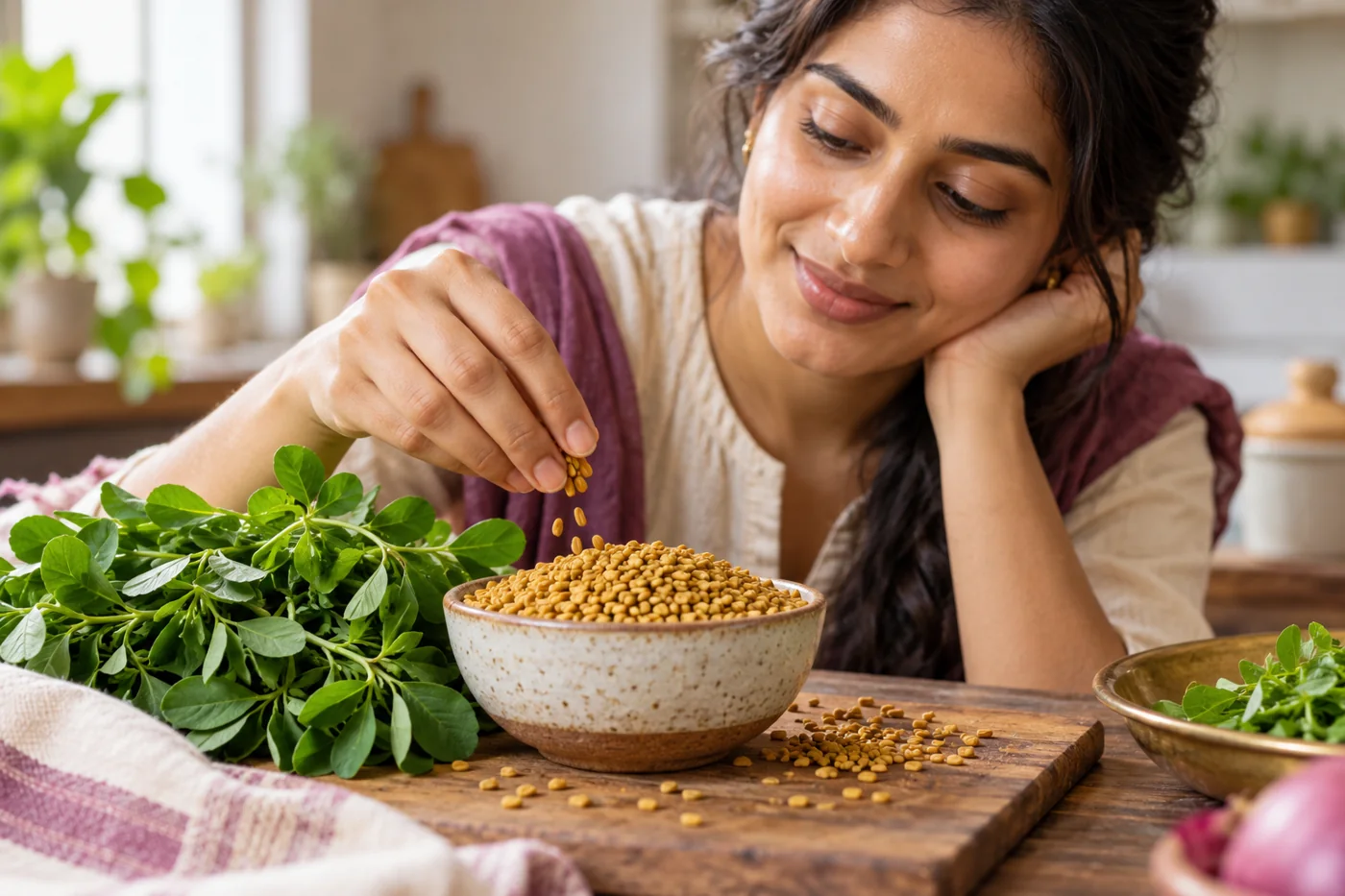
Fenugreek benefits for women: evidence, food uses and safety
Methi is a familiar ingredient in many Indian kitchens. Its reputation as a remedy is much broader than the evidence behind it. Enjoying fenugreek in food is different from taking capsules, concentrated powders or large amounts for a health condition.
What research can tell us
Studies on blood sugar, period discomfort and breast-milk supply have limitations. The US National Center for Complementary and Integrative Health reports that evidence is insufficient or mixed for several commonly promoted uses. That does not mean every traditional food use is harmful; it means a medical claim needs stronger support than popularity.
Food is not the same as a supplement
Using methi to flavour dal or a vegetable dish is a culinary choice. A concentrated extract can expose you to a different amount and may interact with medicines. A product described as “natural” still needs the same basic questions: what is in it, why are you taking it, and is it suitable for you?

Important safety points
Fenugreek can cause digestive symptoms and allergic reactions. Large amounts may lower blood sugar, which matters if you take diabetes medicines. In pregnancy, avoid amounts greater than those typically found in food; medicinal use is not established as safe. During breastfeeding, discuss supplement use with a clinician rather than assuming it will increase supply.
If your goal is better milk supply
Tell a qualified lactation professional what is happening with feeding and the baby’s weight. Bring the exact product label if you are considering a supplement. A promise on a package cannot assess feeding effectiveness or replace support. You should not have to work through conflicting supplement advice alone.
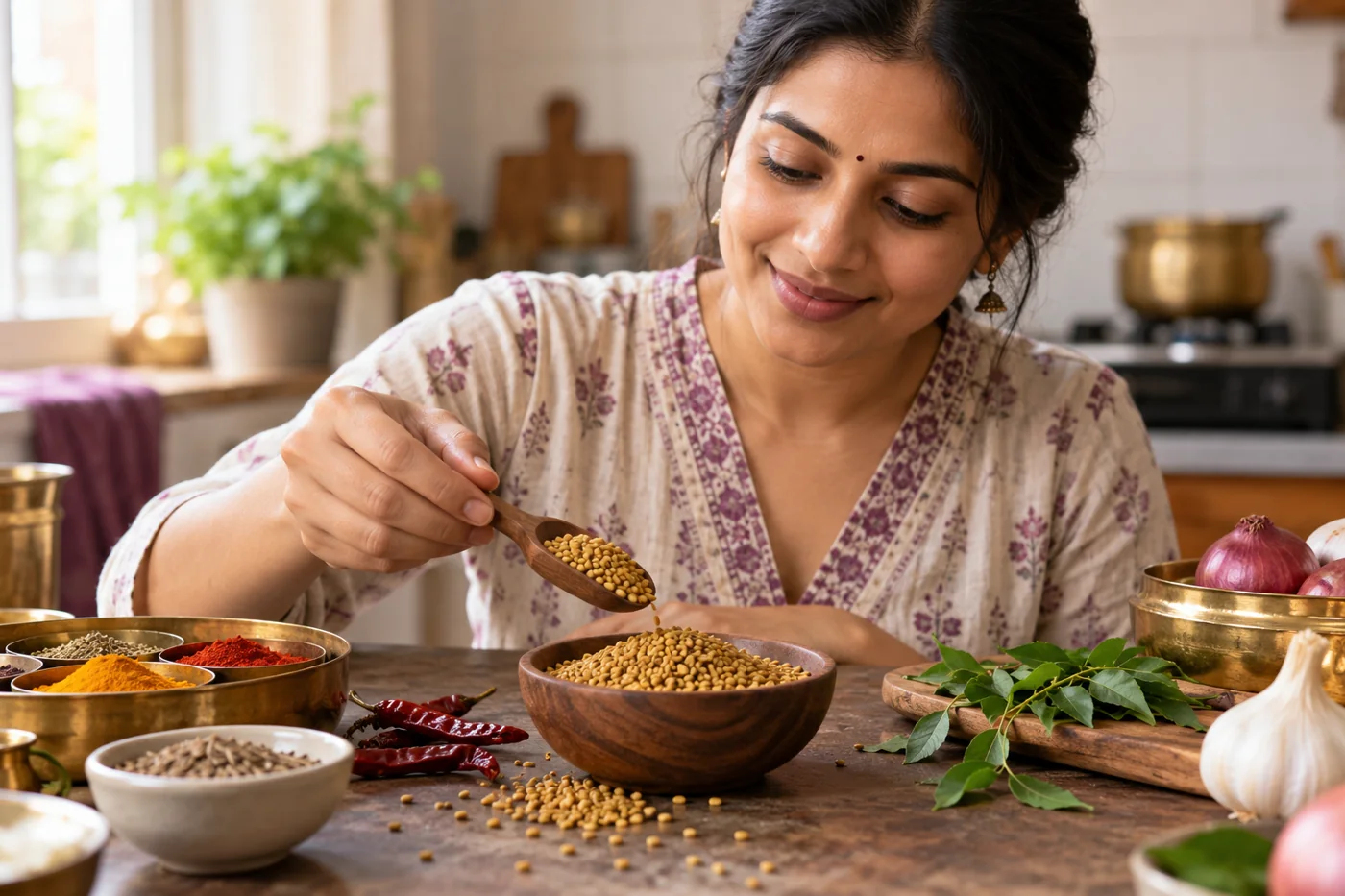
A realistic place in everyday eating
If you like methi, keep it as one ingredient in varied meals. There is no need to drink a bitter preparation on an empty stomach to “balance hormones.” If you have been advised to treat anaemia, PCOS or diabetes, ask how your food preferences fit alongside that plan rather than substituting fenugreek for treatment.
Questions you may have
Does methi cure PCOS?
There is not sufficient evidence to make that claim. Do not replace prescribed care with fenugreek.
Is fenugreek automatically safe while breastfeeding?
No. Evidence for increasing supply is mixed and supplement safety needs an individual discussion.